blog
Creating a weather app

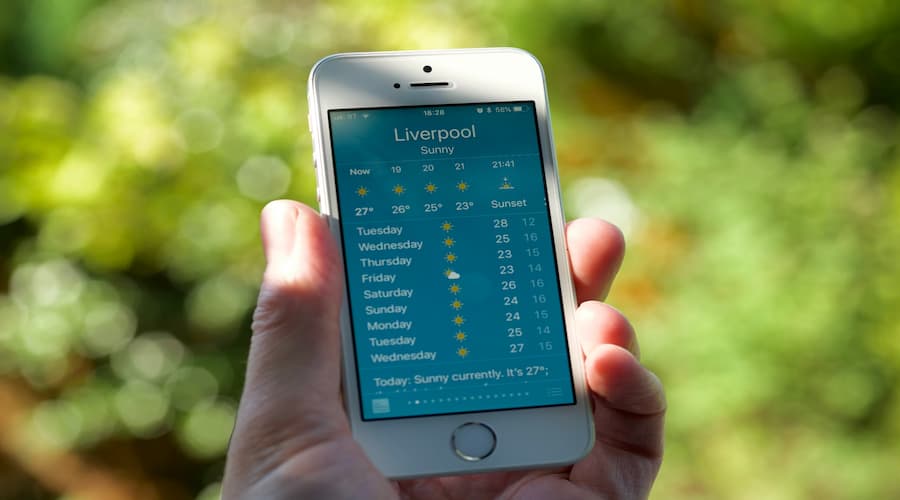
Creating a weather app, amidst rapid technological development, applications have become an integral part of our daily lives, contributing significantly to facilitating access to information and improving our daily experience. Among these applications, those dedicated to monitoring weather conditions stand out, as they are an essential part of our preparation for different days and making better daily decisions.
Developing a weather app is not just an artistic endeavor, but a response to an urgent need in people’s daily lives, as it can effectively contribute to facilitating their lives and enabling them to plan their daily activities efficiently based on accurate information and weather forecasts.
In this context, a weather app comes to be a daily companion for millions of users around the world, providing them with an accurate and effective window into weather conditions and future forecasts.
Creating a weather app and conceptualization
In the conceptualization stage for creating a weather app, you should focus on clearly defining the application’s goal and function. These goals can include displaying current temperatures only or providing accurate long-term weather forecasts. You should also consider whether the application will offer additional features such as severe weather warnings or details about wind speed and precipitation amounts.
Second, it is also preferable to analyze market needs and potential user requirements. Is there a gap in the market that needs to be filled? What features are users looking for in current weather applications? This analysis helps you determine the application’s features that can make it unique and useful for users.
Choosing a Data Source
When creating a weather app and choosing its data source, attention to accuracy and continuous updating should be a priority. You can choose reliable sources such as OpenWeatherMap or Weather API, as these services provide accurate and comprehensive weather data worldwide. It is preferable to choose a source that offers additional features such as long-term weather forecasts and details about expected weather conditions.
After selecting the source, you should verify the terms of use and licenses related to utilizing its data. This helps avoid legal problems and ensures your use of data in a legal and reliable manner.
Designing and creating a weather app interface
When designing and creating a weather app interface, the interface should be simple and easy to use to effectively meet user needs. The interface should prominently and clearly include key information such as current temperature and future weather forecasts.
You can also add simple charts illustrating changes in temperature or wind speed over time. Focusing on providing an attractive visual experience enables the user to understand data easily and quickly.
In addition, it should provide possibilities for customizing the interface according to user needs, such as choosing preferred measurement units or selecting favorite locations to display the weather. Designing a consistent and attractive user interface enhances the user experience and makes the application more effective and comprehensive.
Developing and creating a weather app
In the development and creation phase of a weather app, the focus should be on writing code in an organized and efficient manner. It is preferable to use the appropriate programming language for the specified goal, such as Swift for iOS applications or Kotlin and Java for Android applications. If you want to develop for multiple platforms, you can consider using a cross-platform framework like Flutter or React Native.
The application should also comply with security and performance requirements. Be sure to optimize performance to ensure low system resource consumption and a smooth user experience. This is in addition to conducting comprehensive tests to ensure the application works efficiently and is free of potential errors.
Continuous communication with the development team and regular code updates ensure the application’s durability and security. Agile development methods can also be used to achieve continuous progress and effective integration of new features and improvements.
Creating and adding extra features to a weather app
When adding and creating extra features to a weather app, the focus should be on meeting user needs and desires. These features can include instant alerts for significant weather changes or the ability to display interactive weather maps for a better understanding of weather conditions.
User customization features can also be added, such as the ability to specify favorite locations to display the weather or change measurement units according to user preferences. These features enhance the user experience and make the application more diverse and effective.
In addition, it is advisable to follow user feedback and utilize their responses to determine future features and adjust the application to suit their changing needs.
Creating a weather app and testing the application
When creating a weather app and during the application testing phase, it is necessary to ensure that every part of the application works correctly and efficiently. Application testing should include a thorough check of the user interface and various functions, including weather forecasts and data updates.
It is preferable to conduct tests on various devices and platforms to ensure the application’s compatibility and smooth performance across different environments. It is also preferable to simulate various weather conditions and ensure that the application responds correctly in all conditions.
After conducting initial tests, a group of users can be involved to provide feedback on their experience with the application. This helps detect any unseen problems and adjust the application before publishing it to the public.
Publishing the Application
After completing the design and development stages and creating a weather app, it is time to publish it to the public. First, ensure that the application complies with the requirements of various app stores, such as Google Play for Android systems and the App Store for iOS systems. A precise and attractive description of the application should be provided, accompanied by illustrative images effectively demonstrating its features.
Second, it is advisable to implement promotional campaigns when launching the application to increase awareness among potential users. Social media and online advertisements can be used to highlight the application’s benefits and make it attention-grabbing.
After publication, user comments should be monitored and interacted with effectively. Regular updates and quick technical support contribute to building a good reputation for the application and making it a strong choice for users.
Conclusion
In conclusion, the importance of weather applications is evident in facilitating individuals’ lives and enabling them to plan daily effectively. The application’s design and diverse features reflect attention to meeting user needs and expectations.
By integrating accuracy in forecasts and ease of use in design, a weather app can become a daily companion for users. Continuously improving and updating the application over time enhances its strength and makes it an essential part of the user’s daily routine.
Al Muetamid Developer offers the service of creating a weather app
Our company, Al Muetamid Developer, is a leader in providing application design and development services, including creating a weather app, where we combine technical expertise and creativity to provide unique and effective solutions. We are proud of a team of professional developers who possess high skills in designing and developing applications not only related to displaying temperatures, but also in providing a comprehensive and inspiring user experience.
Our company’s strength lies in providing customized solutions that precisely meet our clients’ needs, whether they are individuals or organizations. We focus on integrating the latest technologies and innovative features to ensure the application’s performance efficiency on multiple platforms.
With our commitment to quality and responsiveness to client requirements, we always strive to achieve their vision and expectations and provide an excellent user experience that makes our applications desirable and loved by users.